Media Theory - Barthes and stream
Engima ( mystery ) - "enigma codes" Roland Barthes
Roland Barthes was born on the 12th November 1915 and died at the age of 64 on the 25th March 1980. He was a French literary theorist, philosopher, critic, and semiotician. He explored a diverse range of fields and he influenced the development of schools.
Barthes said "all text are 'complex'" bundles of meaning. He also said that texts may be "OPEN" or "CLOSED".
Barthes has created five codes for enigma, these codes are:
1. The Hermeneutic Code
Is the way the story avoids telling the truth or revealing all the facts, in ordr to drop clues in through out to help create mystery.
2. The Proairetic code
The way the tension is built up and the audience is left guessing what happens next.
3. The Semantic code
The semantic cod points to any element in a text that suggest a particular, often additional meaning by way of connotation which the story suggest.
4. The Symbolic code
This is very similar to the semantic code, but acts at a wider level, organizing semantic meanings into broader and deeper sets of meaning. This is typically done in the use of antithesis, where new meaning arises out of opposing and conflict ideas.
5. The Cultural code
Looks at the audiences wider cultural knowledge, morality and ideology.

Heroes and villains - "Binary opposite" Levi Strauss
Levi Strauss was born on the 28th November 1908 in Belgium and died at the age of 100 on the 30th October 2009 in France. He was a French anthropologist and ethnologist.
He said narratives can be organised through binary opposition - two thing opposite
 Vladimir Propp
Vladumir Propp was born on the 17th April 1895 and died at the age of 75 on the 22nd August 1970. Propp was a literary critic and a scholar who founded the idea that a certain type of character was to be used in every narrative structure. He analysed traditional stones and invented the 8 character rule.
 1. Villian
Fights the hero in some way. This is the character who struggles against the hero. Typically, with some sort of scarring. The villain usually wears dark and mysterious colours and not very attractive. This is to juxtapose between the hero and the villain to show difference. An example of this can be The Joker from Batman.
2. The Princess
The hero saves them and marries them. This character needs to be rescued from the villain. An example of this can be Gwen Stacy from The Amazing Spider-Man. Shes taken from the villain and rescued.
3. Helper
Helps the hero in the quest. The helper is ho helps the hero fight against the villain. An example of a helper can be Robin from Batman.
4. Provider
Prepares the hero and gives him advice and equipment. This Character offers some sort of help to th hero. An example o this character can be Lucius Fox in Batman.
5. Farther
Gives the task to the hero, identifies the false hero
6. Dispatcher
Character who invites the hero to eliminate the evil. An example of this can b Nick Fury from Avengers who collects heroes in order to send them off to fight evil.
7. Hero
Reacts to the donor. Its the most common type of character type. This is the character who eliminates th villain and win the woman. An example is Spider-Man
8. False hero
Takes credit for the heroes action.
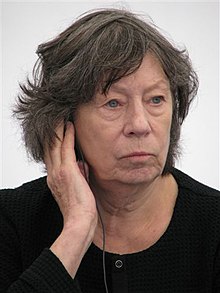
Laura Mulvey said that in North By North West, the camera man is a male, she knows this because of how the camera is angled, it s like an males eye. In the cinema, the films reflects patriarchal society. Patriarchy and phallocentrism are linked to phallus (penis) what is a symbol of men having power. Example: In cinema, a film has gun what is phallus what is power.
An example of Laura Mulveys theory is in a scence of North by North west is near to the end of the film where Mr Kaplin finds out that the woman who has been helping him has been working for the people who are wanting to capture him. In this scene Eve Kendal is being controlled by the villains and has not got one bit of control. Even when Mr Kaplin is disrespecting her. She is shown at high angle shot in this scene to look small and weak.